Connie Leroux
Photographer · Translator · Library Coordinator, Stills Centre for Photography
Photographer, translator and library coordinator at Stills Centre for Photography in Edinburgh.
Thank you. 52 photographs of Edinburgh's private reading lives are now with our judges. Every entrant will hear from us by 20 September 2026.
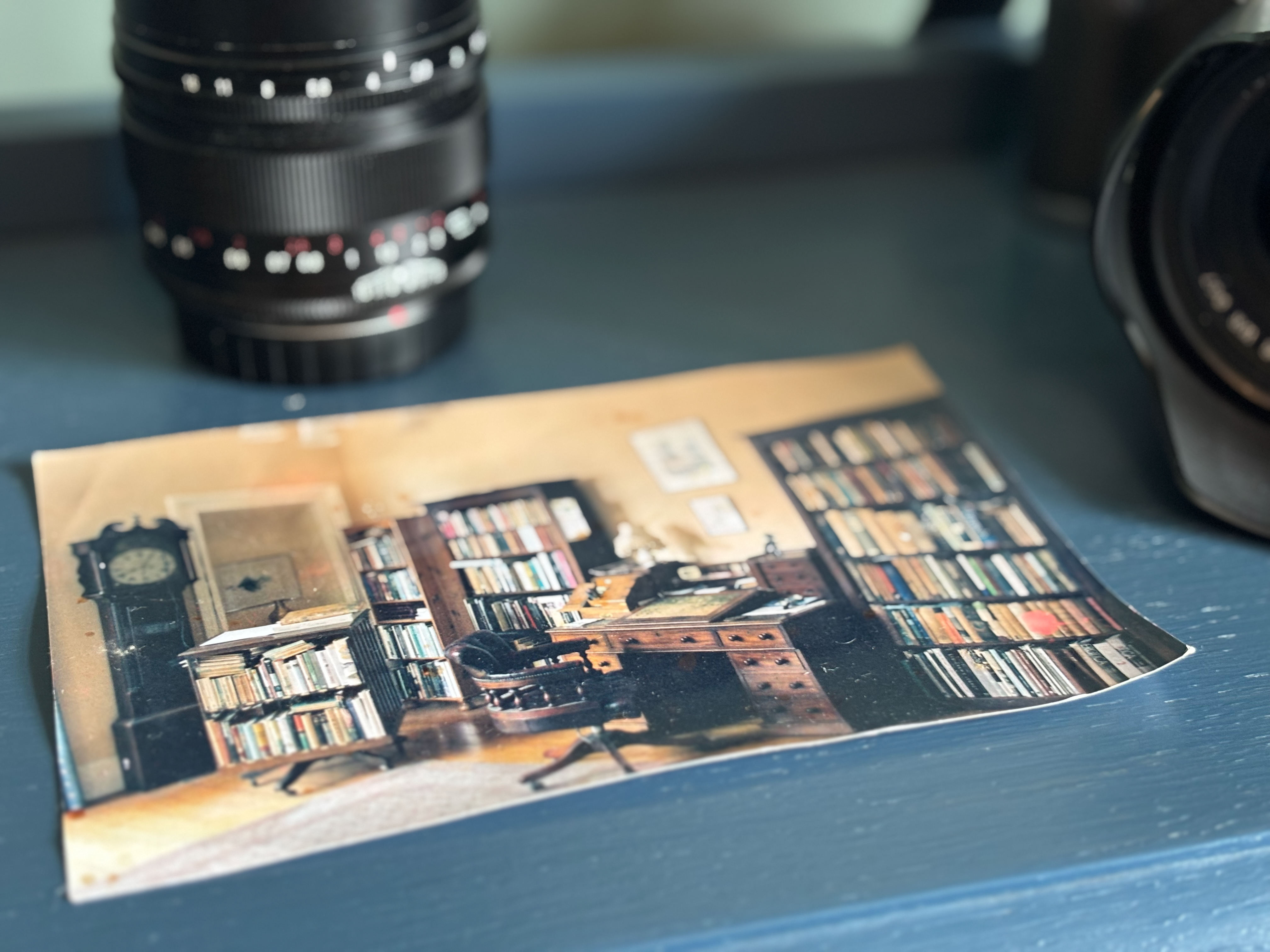
Fifty-two entries arrived from readers across Edinburgh — tenement shelves, box rooms, hallway stacks, collections built over decades. Our four judges are now sitting with the work, weighing each photograph alongside the words that came with it.
Every entrant will be contacted by email by 20 September 2026, whether or not their photograph is selected.
We asked for photographs of the spaces our books actually live in: the shelf above a bed, the pile beside an armchair, a kitchen table buried in paperbacks.
Any photographic style or technique was welcome — documentary, staged still life, experimental printing, montage, impressionistic or expressive work. Each entry is judged on the quality and impact of the image alongside its accompanying statement.
We wanted to see different ways of capturing the domestic life of readers and our collections.
Four judges are reviewing every entry independently before meeting to agree the final selection.
Photographer, translator and library coordinator at Stills Centre for Photography in Edinburgh.
Photographer and Co-Director of AGITATE, Edinburgh's artist-run photography collective.
Photographer, writer and founder of The Nature Library.
Ethnographer with a background in visual cultures, and lecturer in film at the Royal Conservatoire of Scotland.
Every finalist also receives a 1-month Mixer Membership to AGITATE. All winning entries will be exhibited at Tills Bookshop, 1 Hope Park Crescent, for three months from October 2026 — with printing and framing costs for finalists covered by Cultural Commons CIC.
Something about your entry? Email photo@tillsbookshop.co.uk.
By 20 September 2026. Every entrant receives an email, whether or not their photograph has been selected — you do not need to chase us.
No. Entries closed at 23:59 on 30 July 2026 and the submission form is now shut. Do keep an eye out — we hope to run this again.
Each photograph is considered on its own merits, in relation to the strength of the image and its supporting statement. There are no categories for style — still life, analogue development, experimental work, documentary and portraiture are all in the mix together.
You retain full copyright. By entering, you granted Tills Bookshop and Cultural Commons a non-exclusive, perpetual licence to reproduce your work on social media and in connection with the competition and exhibition, always with your name credited. We will not use entries in any for-profit print product.
Selected work will hang at Tills Bookshop, 1 Hope Park Crescent, for three months from October 2026. Printing and framing for finalists is covered by Cultural Commons CIC.
Yes — email photo@tillsbookshop.co.uk before winners are announced and we will remove your work from consideration.